
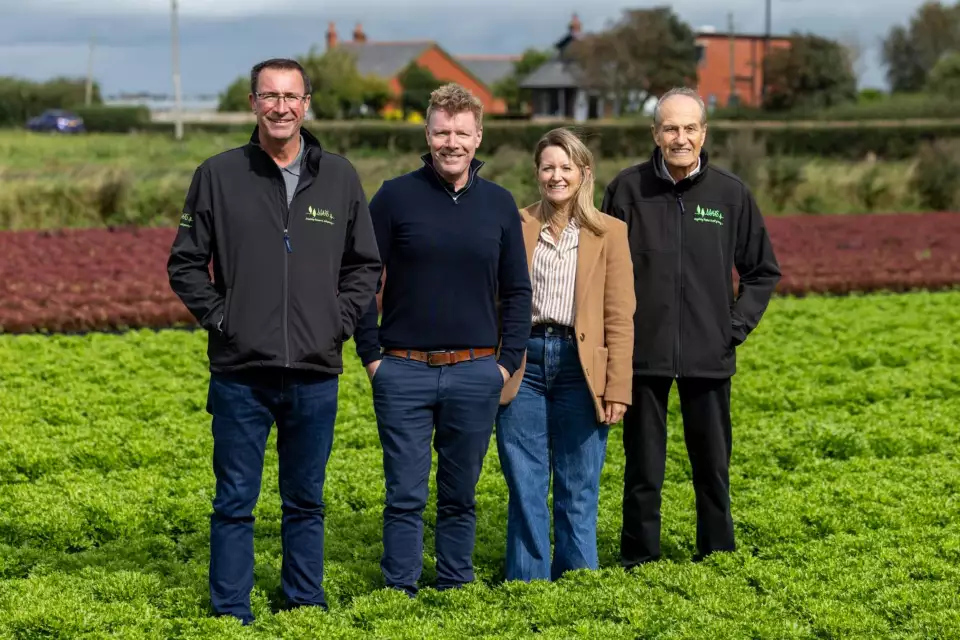
Asda has announced a new 10-year partnership with British salad grower Len Wright Salads worth approximately £250 million, giving the Lancashire-based business greater certainty to invest in production, people and technology.
The agreement, announced on 28 September 2026, extends a relationship between the supermarket and Len Wright Salads that has lasted for more than 35 years. The new contract is worth around £25 million per year and will run through to 2036.
For commercial growers, the agreement provides a recent example of how supermarkets are using longer-term supply arrangements to secure domestic fresh produce while giving growers greater confidence to plan investment.
Long-term commitment to British salads
Len Wright Salads is a family-owned, grower-owned business based in Lancashire and has been producing salads since the 1960s. The company supplies the majority of Asda’s own-label prepared bagged salads, with approximately 37 million bags distributed through Asda stores each year. It also supplies selected stir-fry vegetable lines.
Under the new agreement, the two businesses will continue working together on British-grown salad production, with the long-term nature of the deal intended to provide greater certainty around future supply.
For Len Wright Salads, that certainty is particularly relevant at a time when commercial growers are facing significant decisions around infrastructure, labour, technology and production efficiency.
The company said the agreement gives it confidence to continue investing in its growing operations, workforce, facilities and technology.
Why supermarket contracts matter to growers
Longer-term supermarket agreements can play an important role in commercial horticulture because growers often need to make substantial investments well before the resulting production reaches supermarket shelves.
Greenhouses, irrigation systems, harvesting equipment, packhouses, refrigeration and other infrastructure can require significant capital expenditure. Greater visibility over future demand can make it easier for growers to plan those investments.
The Asda and Len Wright Salads agreement therefore goes beyond simply securing a supply of salads. It provides an example of a retailer and grower using a longer-term commercial relationship to support investment across the supply chain.
Asda said the partnership is intended to support British agriculture and supply-chain resilience, while maintaining a reliable supply of fresh produce for its customers.
Investment in British fresh produce
The Len Wright agreement forms part of a wider push by Asda to invest in British produce.
The supermarket has said that it completed the rollout of LEAF Marque certification across 100% of its UK fresh produce growers in 2024, covering more than 500 farms. The certification programme includes requirements relating to areas such as biodiversity, water stewardship and soil health.
The retailer’s latest partnership also comes during a period when UK growers are dealing with higher production costs and increasingly variable growing conditions.
For salad producers in particular, production can be sensitive to temperature, water availability, labour costs and weather events. Maintaining reliable supermarket supply therefore requires growers to invest in both production capacity and the systems needed to manage increasingly variable conditions.

A wider shift towards longer-term supply
Asda’s announcement is not an isolated example of supermarkets developing longer-term relationships with British growers.
Earlier this year, Sainsbury’s announced plans to expand its long-term partnership model to more than 2,500 British and Irish farms, with the retailer stating that the agreements would represent more than £5 billion of committed investment across fresh produce, dairy, meat and poultry.
Sainsbury’s also announced five-year agreements with 62 British berry farms, including growers such as Angus Soft Fruit, Chambers, Soft Fruits Direct, J.O. Sims and Dyson Farming. The retailer said the longer-term contracts were intended to give growers greater security to invest in sustainability and innovation.
The developments point towards a growing focus on longer-term relationships between major retailers and domestic producers.
For growers, the commercial value of these agreements is ultimately dependent on the individual terms, costs and production requirements involved. However, the recent announcements demonstrate that long-term supermarket supply agreements are becoming an increasingly visible part of the UK’s fresh produce supply chain.
What it could mean for commercial growers
The Asda and Len Wright Salads agreement highlights an important issue for the wider horticulture industry: investment in British production requires growers to have sufficient confidence in future demand.
For businesses considering new glasshouses, irrigation infrastructure, automation, packhouse capacity or other technology, knowing that a major retailer is committed to buying British produce over a number of years can provide a different commercial environment from operating entirely on short-term seasonal agreements.
The deal also demonstrates the scale at which supermarket relationships can operate. With approximately 37 million bags of salad supplied to Asda each year, even relatively small changes in production, efficiency or consumer demand can have implications across a substantial commercial supply chain.
For the UK’s salad-growing industry, the new 10-year agreement between Asda and Len Wright Salads is therefore more than a retail supply announcement. It is another example of supermarkets and growers using longer-term commercial relationships to support domestic production, investment and supply security.
Sources: Asda, Retail Bulletin, Sainsbury’s


Leave a Reply