
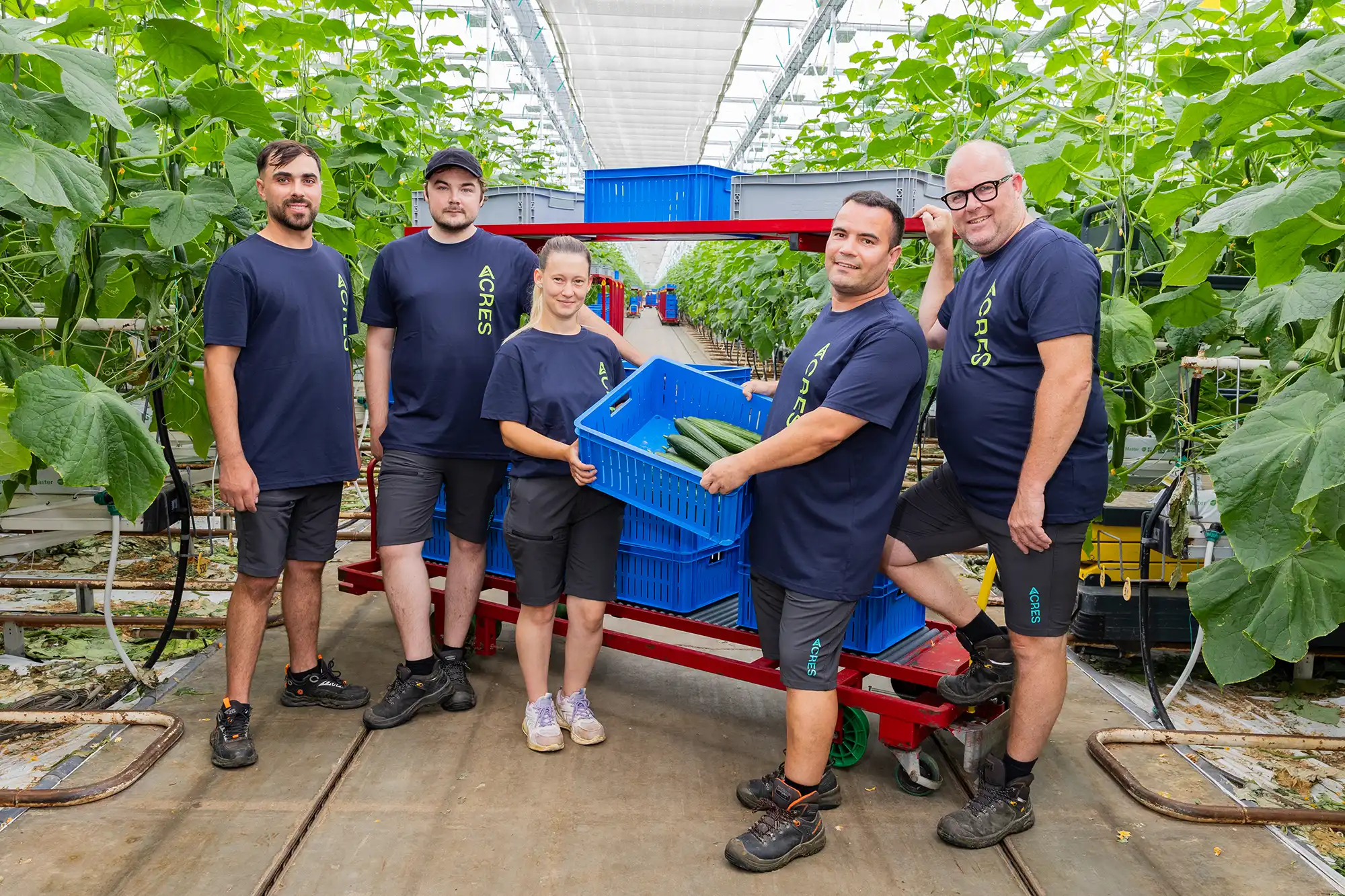
Dutch greenhouse growers Roots and ACRES are merging to create a 64-hectare vegetable business in the Westland, the heart of the Netherlands’ glasshouse industry. The combined company will continue under the ACRES name.
ACRES brings most of the area, growing vine tomatoes and cucumbers. Roots adds its 14.5-hectare greenhouse at Honselersdijk, which specialises in mini cherry tomatoes on the vine.
ACRES’s Juri van Es said the step strengthens the company’s position as it grows “toward a future-proof area of 64 hectares”.
Two years, two mergers
The deal is the second major step for ACRES in under two years. The company only began trading in January 2025, when five Westland growers merged: Lans tomaten, Green2Grow, Prominent I, Prominent II and Kwekerij G.J. van der Wel. Together they ran nearly 50 hectares across six sites in ‘s-Gravenzande and Maasdijk.
Roots has its own merger history. It was formed in 2020 when the Van der Knaap family business in Honselersdijk joined with the Oussoren family’s operation in Zevenhuizen, which was later sold.
| Roots | ACRES | |
|---|---|---|
| Formed | 2020 | January 2025 |
| Main crops | Mini cherry vine tomatoes | Vine tomatoes, cucumbers |
| Area brought to merger | 14.5 ha (Honselersdijk) | The remainder of the 64 ha |
| Sales | Growers United | Growers United |
Both businesses already sold their crops through the Growers United cooperative and belonged to the Prominent growers’ association, so they knew each other well before merging. Luc van der Knaap will join the ACRES management board, while Richard van der Knaap will stay on as an adviser during the transition.
Fewer, larger greenhouses
The merger reflects a long-running trend in Dutch horticulture. According to Wageningen University, the number of Dutch farms and greenhouses has fallen by almost a third since 2010, and very large businesses now produce 62% of the sector’s added value. Succession is often a factor: when the next generation doesn’t take over, joining a larger neighbour keeps the glass in production.
Scale matters in a sector facing high energy, labour and technology costs. Larger businesses can spread those costs across more hectares and offer retailers steadier year-round supply.
Strong prices, for now
The deal comes during a strong year for Dutch tomato growers. In August, Dutch truss tomatoes reached €1.17 per kilo, a five-year high, according to European Commission data, while prices in Spain and Italy stayed below average.
For UK buyers, who rely heavily on Dutch glasshouse tomatoes through the winter, consolidation in the Westland may mean dealing with fewer, larger suppliers, with more negotiating power on their side of the table.


Leave a Reply