
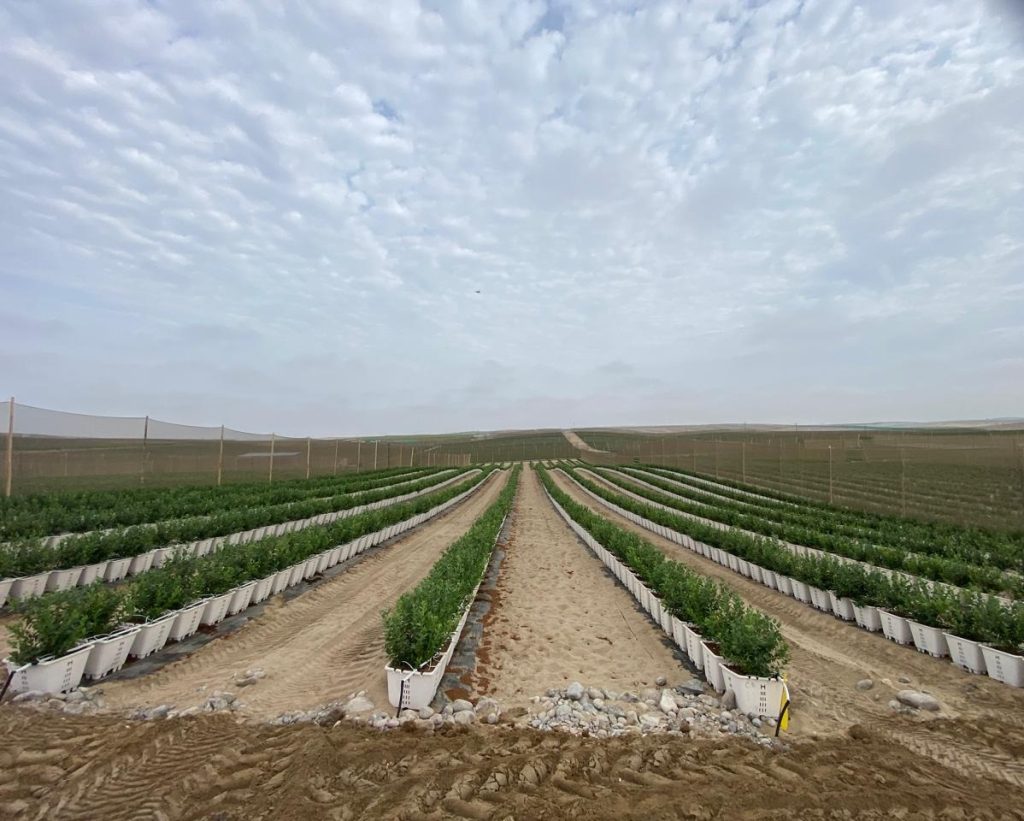
Most growers wait years to see whether a new variety lives up to its promise. Vanguard Group International found out in a single season, across 550 hectares.
The fresh produce company is harvesting the first commercial crop from its new blueberry operation in Peru. Early signs suggest its bold bet on new genetics is paying off.
550 hectares of new genetics at once
Speaking to FreshPlaza, Ethan Williams, President of Vanguard International and Vanguard Direct, explained the scale of the gamble. The company established 550 hectares of new blueberry genetics in Peru, representing a substantial investment in a category that is new to its portfolio.
“Planting 550 hectares of new genetics all at once was a bit of a gamble,” Williams told FreshPlaza. “It seems our research and intuition were rewarded with outstanding varieties though.”
The project moved fast. According to the interview, Vanguard “took barren land and developed sprawling plantations in under 12 months.” The varieties are producing mostly jumbo-sized fruit.
Built to travel
For an exporter, a blueberry’s real test is how it arrives, not just how it looks at harvest. Here, the new varieties are standing out.
“We’ve had 60-day transits that delivered blueberries just as crisp and crunchy as the day they were packed,” Williams said.
That matters because Peru’s blueberry trade depends on long journeys to markets on the other side of the world. Vanguard’s markets include:
- Asia: an important early-season destination, since the period is counter-seasonal to China’s Yunnan harvest
- Latin America: increasing blueberry consumption in Latin America created additional opportunities closer to Peru
- The United States, where Williams says demand has strengthened considerably
Strong fruit in a tough season
Vanguard’s results stand out against a difficult year for Peru. El Niño has kept disrupting Peru’s farm exports, and the Association of Blueberry Producers and Exporters (PROARÁNDANOS) is projecting exports of 304,000 tonnes for the 2026/27 campaign. Vanguard’s own volumes were lower than first projected. The interview puts this partly down to how quickly the operation was developed, and partly to delays with permits and suppliers.
Peru is still the giant of the global blueberry trade. Peru supplied roughly 28,300 tonnes of US fresh blueberry imports between 5 October and 1 November 2026, about 95 per cent of the total.
From next year, Vanguard expects its harvest window to run through January and possibly into February. Its first harvest is due to end in mid-December.

Our take: new genetics are reshaping the southern hemisphere
Vanguard’s experience is part of a wider shift. Across South America, growers are replacing older blueberry varieties with new genetics chosen for size, firmness and shelf life. In Chile, new varieties are expected to reach 30,305 tons, up 39% from last season, and account for 32% of fresh exports.
The lesson is clear. In a world of longer supply chains and more extreme weather, a variety’s value is increasingly measured by how well it travels and copes with stress, as well as by its yield.
That’s relevant for UK buyers and growers too. The UK relies on southern hemisphere blueberries over winter, and better-travelling fruit means better quality on the shelf. For UK growers, the same breeding advances are delivering firmer, larger-fruited varieties for home-grown production.
Sources: Ethan Williams, as told to FreshPlaza; PROARÁNDANOS via FreshFruitPortal; USDA data via ProduceWire; Frutas de Chile.



Leave a Reply