
Most crops grown in vertical farms were originally bred for fields. The University of Georgia (UGA) wants to change that.
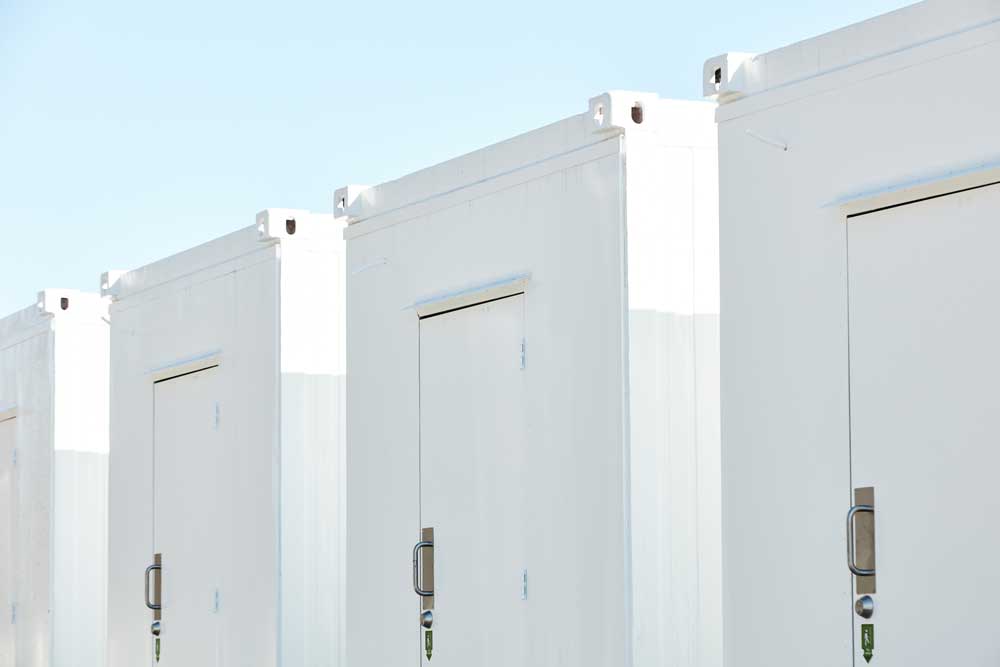
Its controlled environment agriculture (CEA) research group is adding container farms from AmplifiedAg at its Griffin campus, alongside a new high-tech greenhouse. A central aim is to develop new varieties bred specifically for indoor production.
“Our goal is to develop new cultivars specifically for CEA production,” said UGA plant breeder Andrew Ogden. “Our new container farm will provide an optimal environment for pursuing these goals.”
Breeding for life indoors
Ogden says the breeding priorities include:
- Parthenocarpic fruit set, meaning fruit that sets without pollination. That’s useful in sealed growing rooms where there are no pollinators.
- Plant architecture suited to compact, multi-layer systems
- Faster growth and better adaptation to LED lighting
- Better nutrition and appearance
- Resistance to pests and diseases
The team will use marker-assisted selection to shorten breeding cycles. Because container farms give tight control over light, temperature and CO₂, the team can run trials that are more consistent and easier to repeat than field work.

Filling a gap in pest research
The project also targets an area where knowledge is thin: pest management in advanced growing systems. UGA’s IPM specialist and entomologist Erich Schoeller was frank about the gap. “Our lack of understanding of pest management in more advanced production systems leaves us seriously ill-prepared,” he said.
The team will use precise LED and CO₂ control to study how light affects pest behaviour and interactions between plants and insects. It will also develop biorational IPM approaches for edible crops, including biological control. Schoeller stressed that “findings should be validated under greenhouse and, where applicable, field conditions.”
Energy, efficiency and food banks
The team will also work on energy, water and nutrient efficiency, crop scheduling and post-harvest handling. “Energy use remains one of the major challenges for indoor farming,” Ogden said.
The five-person team covers plant breeding, entomology, plant pathology, crop physiology and agricultural engineering. Nothing grown will go to waste. “Produce not needed for research will be donated to local food banks,” Ogden said.
Why it matters
Indoor farms have spent years adapting field genetics to LED-lit rooms. Crops bred for those conditions from the start could be one of the more practical ways to improve yields and cut energy costs. As Ogden put it: “Ultimately, the most impactful research solves practical problems for growers.”
Learn more at www.amplifiedaginc.com


Leave a Reply