
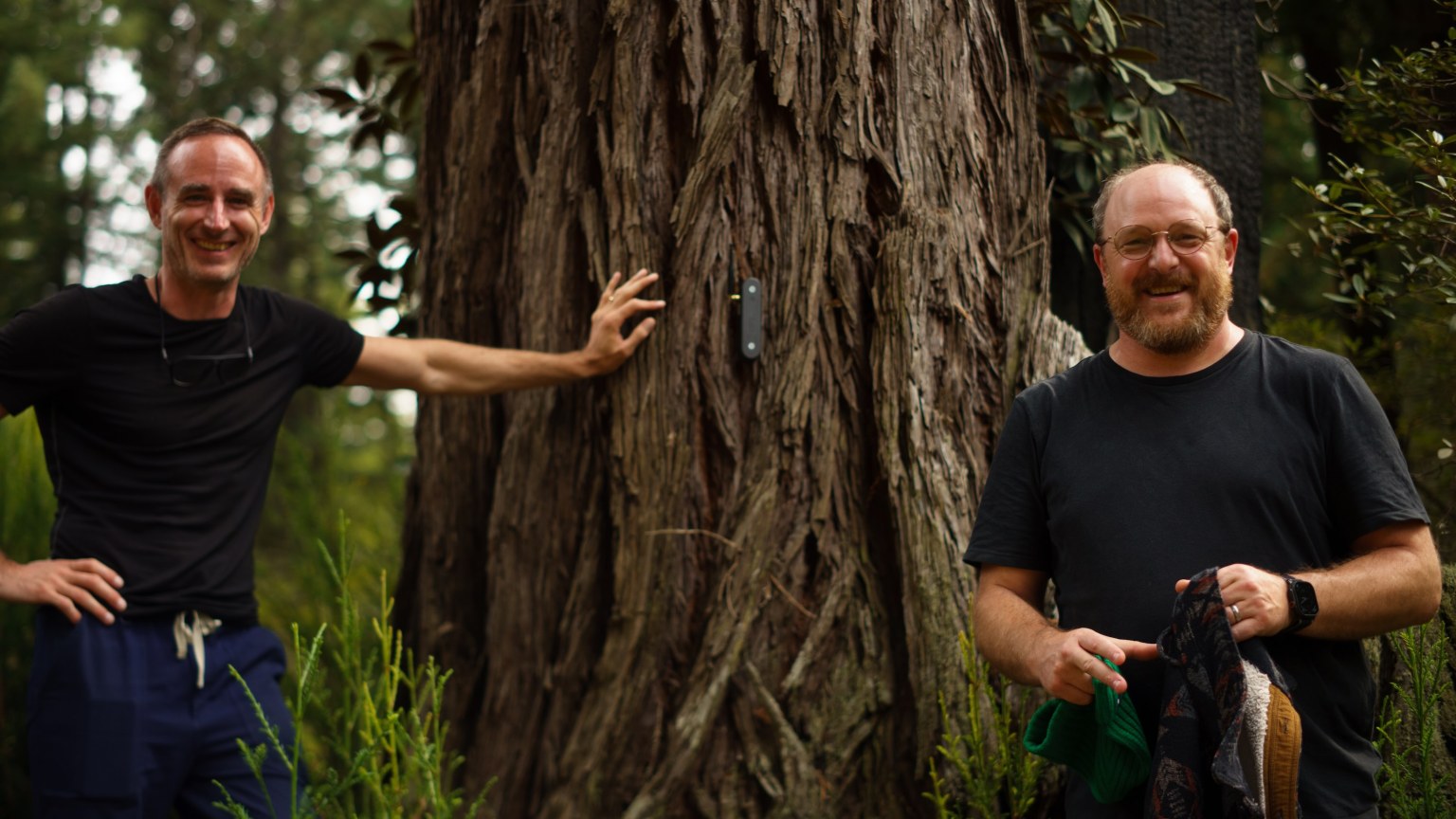
Plants can’t tell growers when they’re thirsty, stressed or sick, but they do give off electrical signals. US start-up Electric Plant has built an AI model to read them.
The company has come out of stealth with $11.2 million in seed funding and launched Bombadil, which it describes as a foundation AI model for plant electrophysiology. According to its announcement on 20 October, the round was led by Onto Ventures and Climactic, with Ponderosa, Endeavor Catalyst, Ludlow, Michigan Rise, The Fund, Schox VC and Dug Song also taking part.
How it works
The system has two parts:
- Bud: a low-cost sensor that attaches to a plant and records the electrical signals in its tissue, which change with the plant’s physiological state, including stress.
- Bombadil: the AI model that decodes those signals and tells the grower how the plant is doing.
Electric Plant says Bombadil can estimate seven physiological stress markers from the electrical signal alone. They include photosystem II efficiency (how well the plant is photosynthesising), the leaf-to-air temperature difference, and the Crop Water Stress Index.

Trained across the plant kingdom
The model was trained on more than 4 million hours of electrical recordings from over 1,400 plants across 100 species. The company says that makes it the most species-diverse foundation model built on biological signals, and that its data has since grown to 7 million hours.
The company says the key breakthrough is that it works on plants it has never seen before.
“Most earlier models of plant electrical signals worked for one species in one setting, so a new plant or new environment meant starting over,” said James Kirk, head of AI/ML. “Bombadil learns what is common across species, which is why it can read a plant it never saw in training.”
A gardener’s knowledge, at scale
Electric Plant was co-founded in 2023 by CEO Justin Mast, who previously founded online plant retailer Bloomscape, and Chief Scientist Lee von Kraus, a neuroscientist.
“Master gardeners spend a lifetime learning a single plot, from the soil moisture level to the way the sunlight hits a tree in a specific corner,” said Mast. “Bombadil makes that kind of intimate knowledge possible at scale, using data derived from inside the plant itself.”
Tom McQuillen, Partner at Onto Ventures, said: “What excited us about Electric Plant is the possibility that all plants share an underlying electrical language that can be learned across species.”
What’s next for Electric Plant?
Hundreds of the sensors are already in use at commercial sites. The company plans to license its technology to existing plant care operators rather than compete with them, and is looking for more “founding operators”. It plans to expand crop by crop, and to add new capabilities such as disease detection and predicting bloom timing.
Why it matters for growers
Most crop monitoring measures the environment around the plant, such as temperature, humidity and soil moisture, rather than the plant itself. A sensor that reads stress from inside the plant could warn growers about problems earlier, before they show on the leaves. It’s early days, and the company hasn’t yet published results from named growers. But for greenhouse, nursery and ornamental growers, it’s a technology worth watching.
Image Credit: Electric Plant
Learn more at https://www.electricplant.co


Leave a Reply