
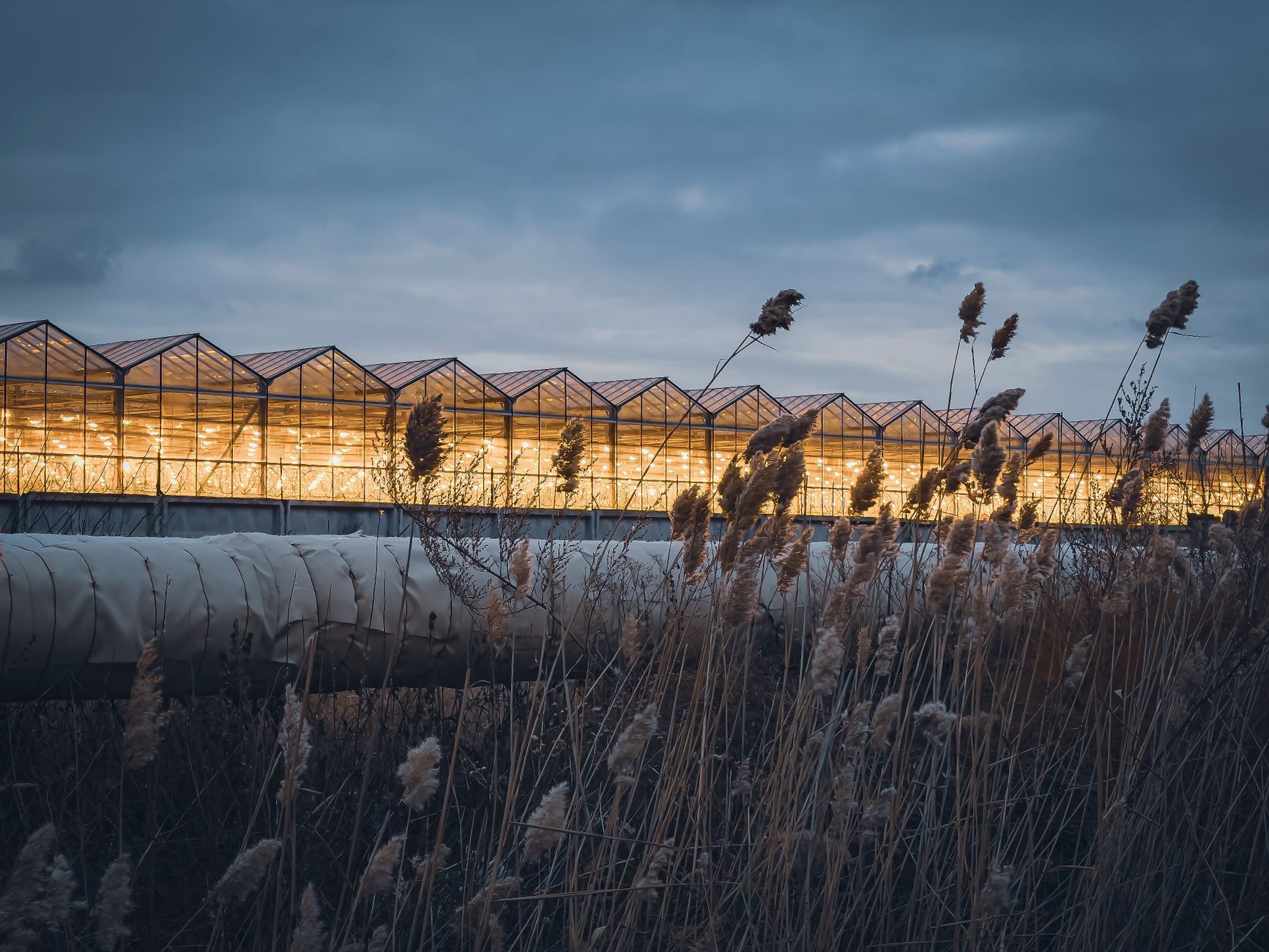
For decades, orange-glowing SON-T (high-pressure sodium) lamps have lit Europe’s glasshouses through the winter. Now their future is in question. A Dutch manufacturer has just launched a retrofit to help growers switch to LED. But how soon do growers actually have to move?
The news: a plug-in route to LED
Climalux, a grow-light specialist based in Hoek van Holland in the Netherlands, has launched a new power supply unitdesigned to make replacing SON-T lamps with LED simpler.
The company says the system uses one power supply per lamp and needs no changes to existing cabling, removing one of the biggest costs and hassles of a lighting changeover. According to Climalux, the unit:
- has a low inrush current and high electrical efficiency
- is infinitely dimmable, with separate settings for work lighting and grow lighting
- sits outside the lamp, keeping fixtures compact and shading low
- can run one lamp, or several from a single unit
The lamps keep Climalux’s signature feature: a built-in fan that cools the fixture and provides adjustable vertical airflow in the glasshouse. The system is managed by the company’s Horticulture Control Unit.
So is SON-T being banned?
Climalux’s announcement says SON-T lamps “will soon no longer be permitted for sale” under stricter European rules. The reality is more nuanced.
High-pressure sodium lamps contain small amounts of mercury, which is restricted under the EU’s RoHS (Restriction of Hazardous Substances) rules. Lamps used for horticulture can still be sold thanks to a specific exemption, known as 4(f)-III, which is listed as valid until 24 February 2027.
That date is not a hard stop:
- A renewal has been requested. LightingEurope, the lighting industry body, applied in August 2025 to renew the horticulture exemption for the maximum five years.
- The exemption stays valid while the EU decides. According to LightingEurope, exemptions under review “will remain valid, also after the listed expiry dates, until the European Commission has taken a decision”.
- A refusal would still come with a transition period. If renewal is refused, the Commission must grant 12 to 18 months before the final phase-out.
The rules also only cover selling new lamps. Growers can keep using SON-T lamps they already have. What changes, eventually, is the supply of replacements.
In Great Britain, RoHS rules largely mirror the EU’s, but exemptions are managed separately by Defra, and decisions are announced independently. UK growers should watch for GB-specific announcements, and note that EU supply chains will affect lamp availability either way.
Why many growers are switching anyway
Even without a firm ban date, the case for LED is strong for many businesses:
- Energy costs. LEDs generally turn more electricity into light than SON-T. With energy prices forecast to rise again in January, that matters.
- Control. LEDs can be dimmed and adjusted in response to daylight or energy prices, which SON-T can’t do.
- Supply risk. As lighting makers wind down production, spare SON-T lamps may get scarcer and more expensive.
There are trade-offs. LEDs give off much less radiant heat than SON-T, so growers often need to adjust heating and humidity strategies when switching. The extra heat from SON-T lamps is part of how many glasshouses are run in winter. Upfront costs are also significant, which is why retrofit options that reuse existing infrastructure are attracting interest.
What growers should do now
- Don’t panic-buy, but plan. Existing lamps remain legal to use. Keep a sensible stock of spares and watch for the EU decision, and for Defra’s for GB.
- Audit your lighting. Note the age of your fixtures, your energy use and the condition of your cabling, as these determine your best upgrade route.
- Compare options. Weigh full LED replacement, hybrid SON-T and LED set-ups, and retrofit systems on cost, energy savings and their effect on your glasshouse climate.
- Model the climate impact. Talk to your climate computer supplier or adviser about how LEDs will change heating and humidity needs for your crop.
Source: Climalux announcement, November 2026; LightingEurope RoHS statement.



Leave a Reply