
Growers measure almost everything: water, nutrients, light, yield. But pollination, the step that decides whether a flower ever becomes a fruit, is still largely judged by eye and by standard hive numbers.
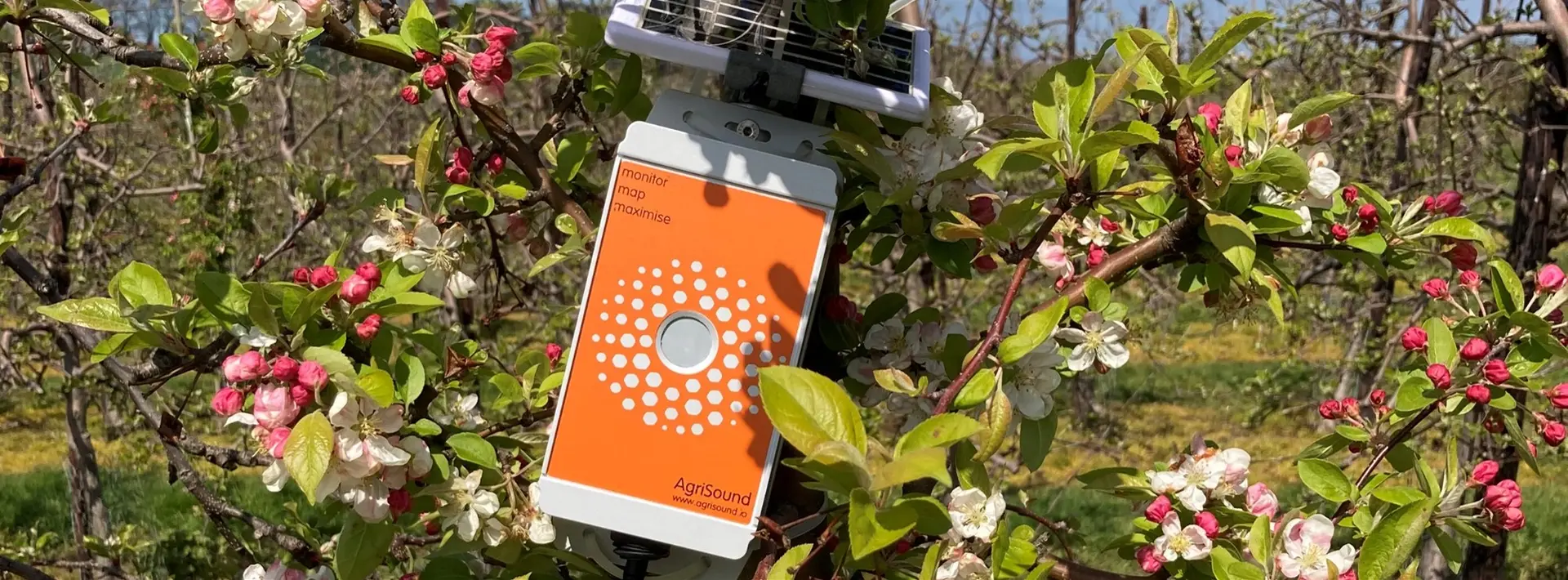
York-based AgriSound wants to change that. Its bioacoustic sensors listen to the crop and turn the buzz of passing insects into data. The aim is to make pollination monitoring as routine as checking irrigation.
At a glance
| Founded | 2020 |
| Based | York |
| Founder & CEO | Dr Casey Woodward |
| Product | Polly, a solar-powered bioacoustic pollinator sensor, plus AI analytics |
| Crops | Strawberries, with work extending to blueberries, raspberries, blackberries, cherries and apples |
| Backers include | EIT Food, Tesco/WWF Innovation Connections, Innovate UK, crowdfunding and angel investors |
How pollination monitoring with Polly works
Polly sits in the crop and listens around the clock. AgriSound says it works much like a smart speaker. It picks up the sounds of insects, and sound-analysis algorithms turn those sounds into activity scores. Growers can then see where and when pollinators are working, and spot the parts of a field where activity is low.
That matters because pollination gaps are otherwise hard to see until fruit set disappoints. Real-time data lets growers act sooner, for example by moving hives, adjusting hive numbers or improving habitat. It also gives them evidence of what their nature-friendly measures are doing.
Why it’s in the news
On 3 November, AgriSound announced a strategic partnership with the Applied Pollination Institute of Science (APIS). APIS is an independent pollination science and advisory organisation founded by pollination scientist Dr Angelita De la Luz. The partnership pairs AgriSound’s in-field technology with APIS’s expertise in study design and grower education.
“Pollination is fundamental to crop production, but it remains one of the least measured parts of the growing process,” said Woodward. “This partnership will help bridge the gap between technology, science and action in the field.”
Dr De la Luz added: “Effective pollination management begins with understanding what is happening in the crop.”
A busy 2026
The APIS deal caps a strong year for the start-up:
- Berry trials (June): AgriSound launched an 18-month ADOPT-funded smart pollination project. It covers 20 hectares of commercial strawberries at Tasker Partnership in Nottinghamshire and P J Stirling in Scotland, both of which supply BerryWorld. York St John University provides independent analysis.
- Breeding project (July): a two-year project with the James Hutton Institute and Hutton Scientific Servicesstarted on 1 July. It is backed by Defra’s Farming Innovation Programme and Innovate UK, and aims to extend Polly beyond bumblebees in strawberries. The goal is a multi-species, multi-crop system covering honeybees, solitary bees and hoverflies in strawberries, blueberries, raspberries, blackberries and cherries. The project will also explore how flower traits affect how attractive plants are to pollinators, which could shape future varieties.
- Earlier work includes a pollination study with Dole in Kent, orchard monitoring with Tesco and WWF, and work with innocent drinks on apple orchards.
Our take
Pollination is one of the last big blind spots in protected and soft fruit production, and AgriSound is tackling it in the right way. It is building evidence through grower-led trials and serious research partners, not just selling sensors.
If the Hutton project delivers, the benefits could go beyond better hive management. It could help breed varieties that are easier for bees to pollinate. That matters at a time when weather swings and changing pollinator populations make fruit set less predictable.
Is your start-up changing UK horticulture? Email us to be considered for Start-up of the Week.
Image Credit: AgriSound


Leave a Reply