
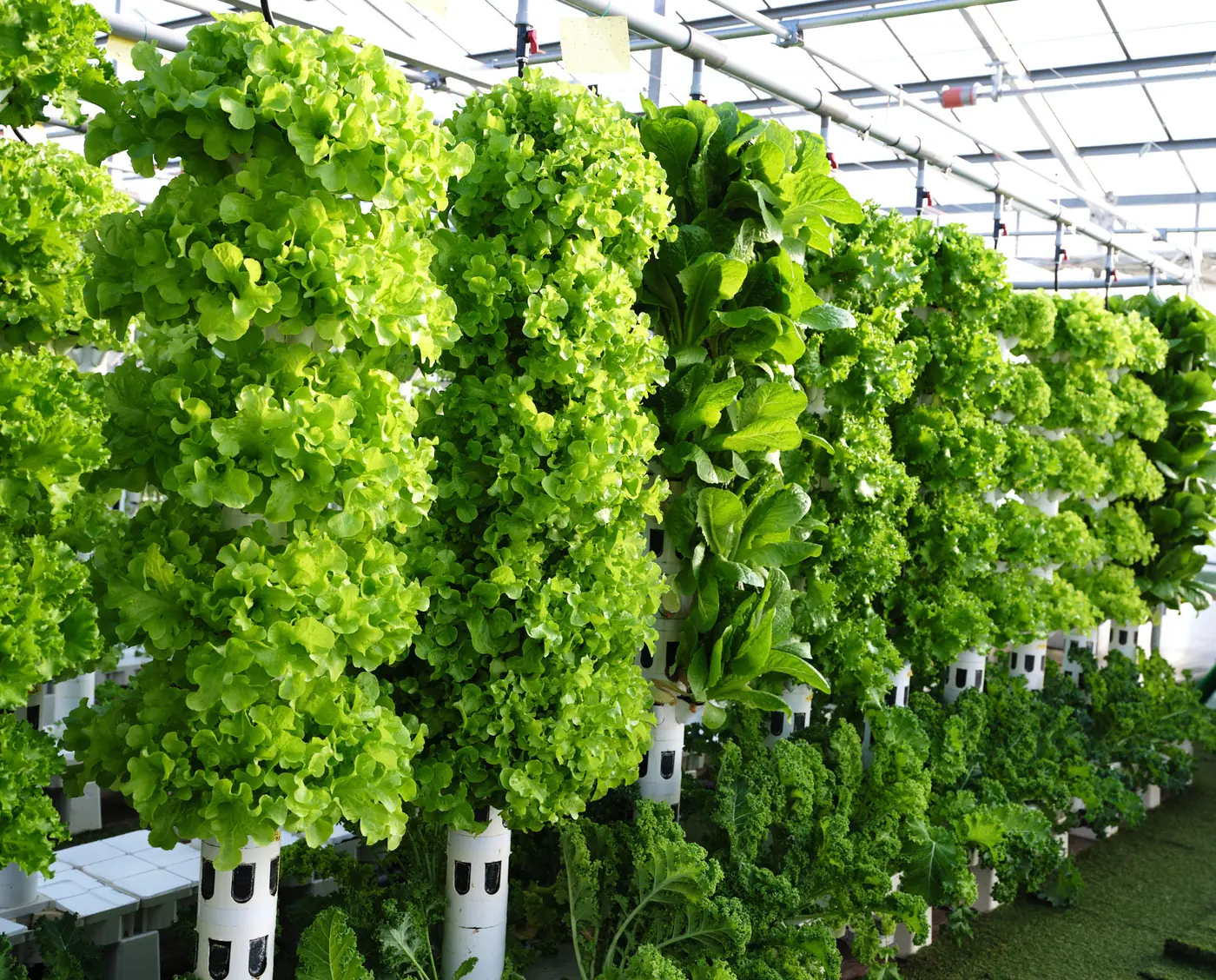
What if your fish tanks could fertilise your crops? That’s the idea behind aquaponics, and Japanese specialist Aquponi is now taking its systems to the United States.
According to HortiDaily, Aquponi’s US business will start in California and Hawaii, offering packages from 10 to 250 square metres. It’s led by Nelson Wei Tan from Elk Grove, California.
How aquaponics works
Aquponi’s systems combine fish farming and soilless crop growing in one loop of water:
- Fish produce waste rich in ammonia.
- Bacteria in the filters convert it into nitrate, a natural plant fertiliser.
- Plants take up the nutrients and clean the water.
- The clean water flows back to the fish.
“Our experience in Japan has shown that aquaponics must be managed as an integrated production system,” said Tan. “Fish stocking, crop selection, nutrient availability and water quality all need to be considered together.”
Aquponi has trialled 76 crop varieties, including lettuce, strawberries, herbs and tomatoes, and seven fish species. Its main fish is triploid rainbow trout. The company has also recently launched a fully enclosed LED system that grows strawberries and trout together.

The numbers, according to Aquponi
- About 80% less water than growing in soil, and about 66% less than conventional hydroponics
- About 50% less energy than running fish and vegetable production separately
- 72 farms designed and built in Japan, plus three patents
In a six-month demonstration in Kanagawa Prefecture, in a 100m² enclosed LED facility growing lettuce with tilapia, the company reported:
- 99% less nitrogen fertiliser
- 76% less electricity for heating, cooling and related equipment
- 22% heavier lettuce heads
Aquponi’s designs range from about 10 lettuces a day in 50m² to more than 1,000 a day in 4,000m². Its 1,200m² strawberry system is designed to ship 36 tonnes a year.
No pesticides allowed
Because the fish and plants share the same water, chemical crop protection is off the table. “Because pesticides can harm fish or disrupt the biological system, pest management relies heavily on prevention,” Tan said.
The company plans to trial “Aquponi AI”, a cultivation chatbot for growers, from around November. It’s also exploring Vietnam, Saudi Arabia and Dubai.
About Aquponi
Aquponi was founded in 2014 and is based in Yokohama, with CEO Kengo Hamada. Around a fifth of the organisations using its systems in Japan are farming or forestry businesses. Others include manufacturers, schools, construction companies, welfare organisations and local councils.
Why it matters
Vertical and indoor farming has had a tough few years, mostly because of energy costs. Aquponi’s approach adds a second product, fish, to the same space, water and energy, and largely does away with bought-in fertiliser. That changes the economics. Its success in Japan with farms, schools and community groups shows aquaponics can work at many different scales. The US launch will be a useful test of whether it can work as a commercial business elsewhere.
Image Credit: Aquponi
Related Articles: https://the-fresh-edit.com/2026/10/05/elevate-farms-autonomous-vertical-farming-uae-sharjah/


Leave a Reply