
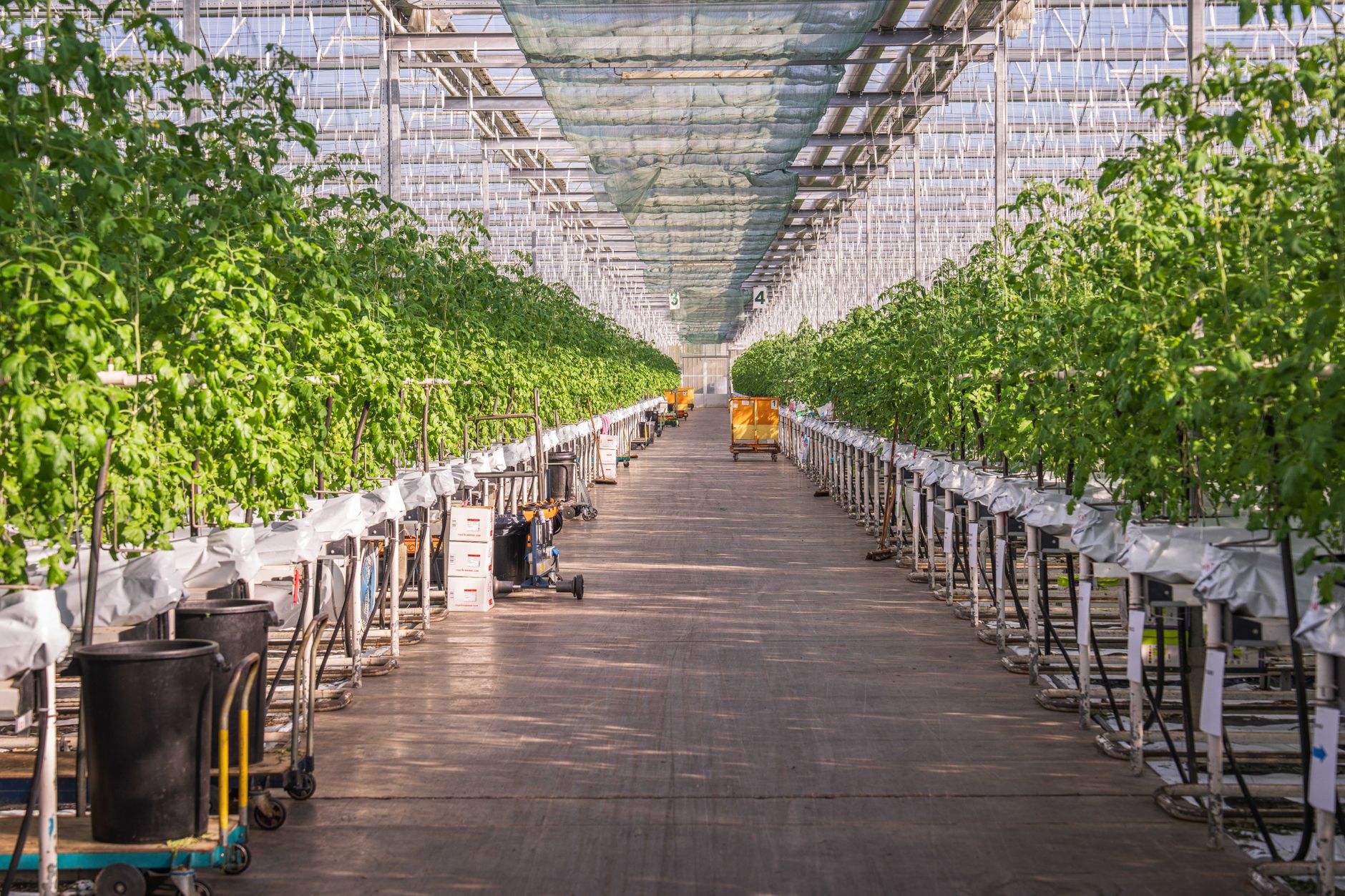
Canada has opened one of the biggest packages of greenhouse funding in the world, aimed at growing more fruit and vegetables at home all year round.
On 30 October, Canada’s Minister of Agriculture and Agri-Food, Heath MacDonald, launched the C$750 million Controlled Environment Agriculture (CEA) Growth Pathway Program, HortiDaily reports. It’s part of Canada’s C$3.2 billion National Food Security Strategy, first announced in June.
“Controlled environment agriculture is transforming how food is grown in Canada,” MacDonald said. “By investing in year-round production of fresh fruits and vegetables closer to home, these technologies will strengthen food security, create jobs, and support economic growth in communities across the country.”
How the greenhouse funding works
The programme has two streams:
| Stream | Funding | What it supports |
|---|---|---|
| CEA Technology Adoption | C$650m | Adopting, expanding and modernising greenhouse and indoor farm infrastructure, including automation, robotics, lighting and digital growing tools |
| Rural and Northern Communities | C$100m | Community-led projects that increase local food production and access to fresh food |
According to Greenhouse Canada:
- Approved projects can receive C$100,000 to C$10 million.
- Technology Adoption funding may be repayable or non-repayable, depending on the project. Rural and northern funding is non-repayable.
- Applicants submit a Project Summary Form by 23 December 2026, and suitable projects are then invited to make a full application.
Canadian greenhouse builder Harnois, in a summary for its customers, says the Technology Adoption stream covers up to 50% of eligible costs, rising to 60% or 70% for novel crops or projects led by under-represented groups. It also says ornamentals and cannabis are excluded, with the focus on fruit and vegetables.
More than just grants
The programme sits alongside other Canadian measures, including immediate tax expensing for greenhouse buildings, Farm Credit Canada’s C$1 billion Agri-Food Project Finance Fund, and a C$1 billion Food-Link Fund.
The reason is simple: Canada’s short growing season. Canada imports close to 90% of its fruit and around 70% of its vegetables, Michael Widener of the University of Toronto told Global News when the strategy was first announced.
What it means for the UK
The UK faces a similar challenge, in a different way. Last month, a peer-reviewed study by Dr Sven Batke and David Denny of the Horticultural Trades Association found that more than 70% of the UK’s commercial glasshouses are over 40 years old, and that renewing them would cost several billion pounds. Read our story: https://the-fresh-edit.com/2026/10/09/uk-greenhouses-renewal-study/
Their recommendations included capital grants, loan guarantees, long-term contracts and treating greenhouse capacity as part of national food resilience, very much the approach Canada has now taken.
There’s no equivalent programme in the UK at the moment. But Canada’s package, with funding linked to automation, lighting and energy efficiency, gives a clear example of what large-scale government support for protected cropping can look like.
Why it matters
Countries are treating greenhouses as food security infrastructure, not just as businesses. Canada is betting that technology such as robotics, LEDs and digital growing tools, backed by public funding, can make year-round local production competitive with imports. UK growers, policymakers and industry bodies will be watching how it works.



Leave a Reply