
A biostimulant made from farmed giant kelp has come top for root development in an independent glasshouse tomato trial. It also used a fraction of the dose of some competitors.
The product is StimBlue+ from Kelp Blue. In a 2026 rockwool tomato trial at the World Horti Center, run by Vertify, StimBlue+ was compared against six commercial programmes and an untreated control, eight treatments in total. StimBlue+ had the highest slab rooting of all eight treatments at every assessment point: 53% vs 41% at the start (+27%) and 84% vs 69% at the end (+22%). hortidaily

A lower dose
The application rate is what stands out for growers. The trial used 1 L/ha at planting plus 0.3 L/ha per week, about 5 L/ha in total, while some competing products use 10 L/ha per application. hortidaily
The researchers also added a useful caveat. Vertify noted that a favourable spring can mask treatment effects, so a visible response in those conditions is encouraging for seasons with more heat, higher electrical conductivity or irrigation stress. hortidaily
Built for stress, not pests
StimBlue+ isn’t a crop protection product. It targets abiotic stress, such as drought, heat waves and sudden temperature drops, rather than pests or pathogens. According to the company: hortidaily
- under drought, it helps regulate stomata and supports root growth signals hortidaily
- under heat, treated plants keep more stable photosynthetic activity, and in cold, it activates genes linked to low-temperature response hortidaily
The results are being prepared for publication. hortidaily
Trial results in other crops
The company cites other independent field trials:
- Strawberries: trials by Staphyt showed 15% more marketable fruit at 2 L/ha, 7 points above an Ascophyllum nodosum-based biostimulant, and a 19% increase in Brix. hortidaily
- Tomatoes: trials by SynTech Research in Mexico showed an 8–10% increase in cumulative yield. hortidaily
- Peppers: trials by SAGEA Group in Italy showed a 5% yield increase and improved colour. hortidaily
Why farmed kelp matters
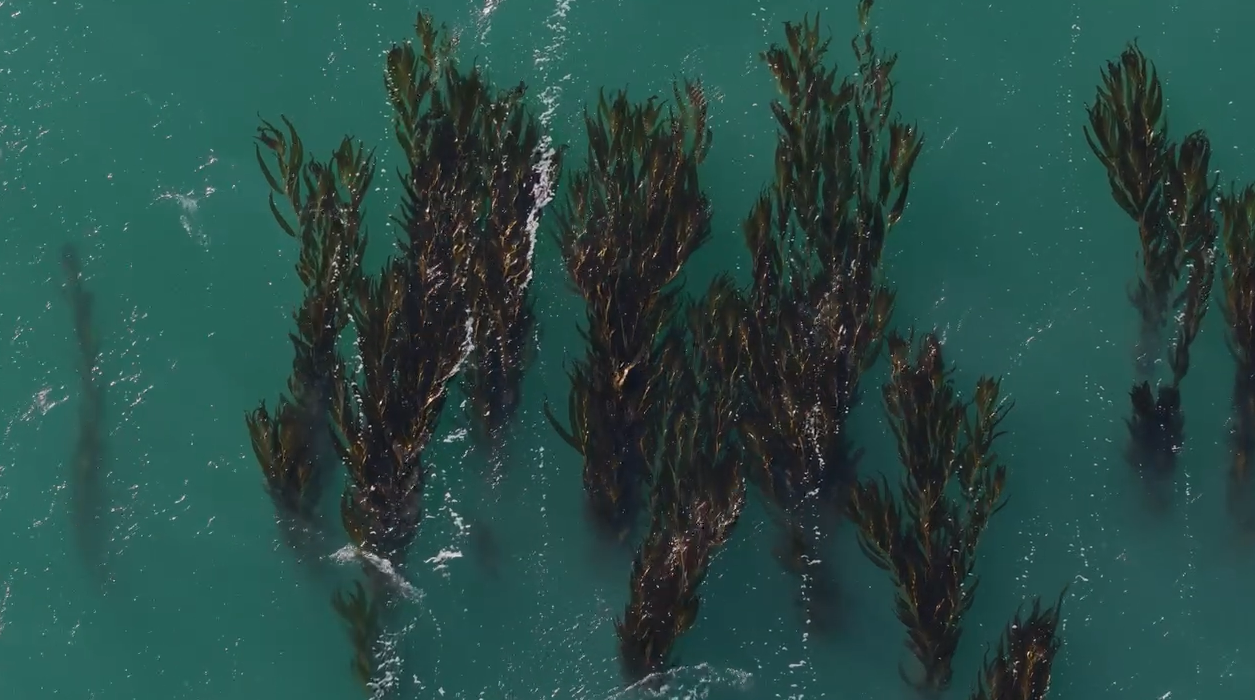
Most seaweed biostimulants rely on wild-harvested seaweed, so supply and consistency can vary. Kelp Blue grows its own. The company holds more than 6,000 licensed hectares off the coast of Namibia, which it says makes it one of the few able to offer a cultivated, reliable, commercially scaled supply. It harvests only the canopy of the underwater kelp forests, roughly the top metre, which regrows quickly. hortidailykelp
“Sustainability alone was never enough,” the company says. “A product has to work, deliver real value to the grower, and make commercial sense.” hortidaily
What it means for UK growers
For UK glasshouse tomato and pepper growers, a stronger root system early in the season is valuable. It’s even more valuable as hotter, more variable summers bring more heat and irrigation stress.
StimBlue+ also fits easily into existing systems:
- It’s fully soluble, and compatible with nutrient solutions and most fertilisers and crop protection products, provided the tank stays below pH 7 and a jar test is run first. hortidaily
- It’s permitted under EU organic regulations and the USDA National Organic Program, and carries CE marking. hortidaily
- Kelp Blue is expanding across Europe. hortidaily
As always, these are one company’s trial results, so growers will want to see how it performs in UK conditions. But it’s an encouraging sign of how quickly the biostimulant category is maturing.
Read more: Biologicals in horticulture: a grower’s guide
Source: Kelp Blue, via HortiDaily.
Image Credit: Kelp Blue


Leave a Reply