
A guide from The Fresh Edit. Last updated: October 2026.
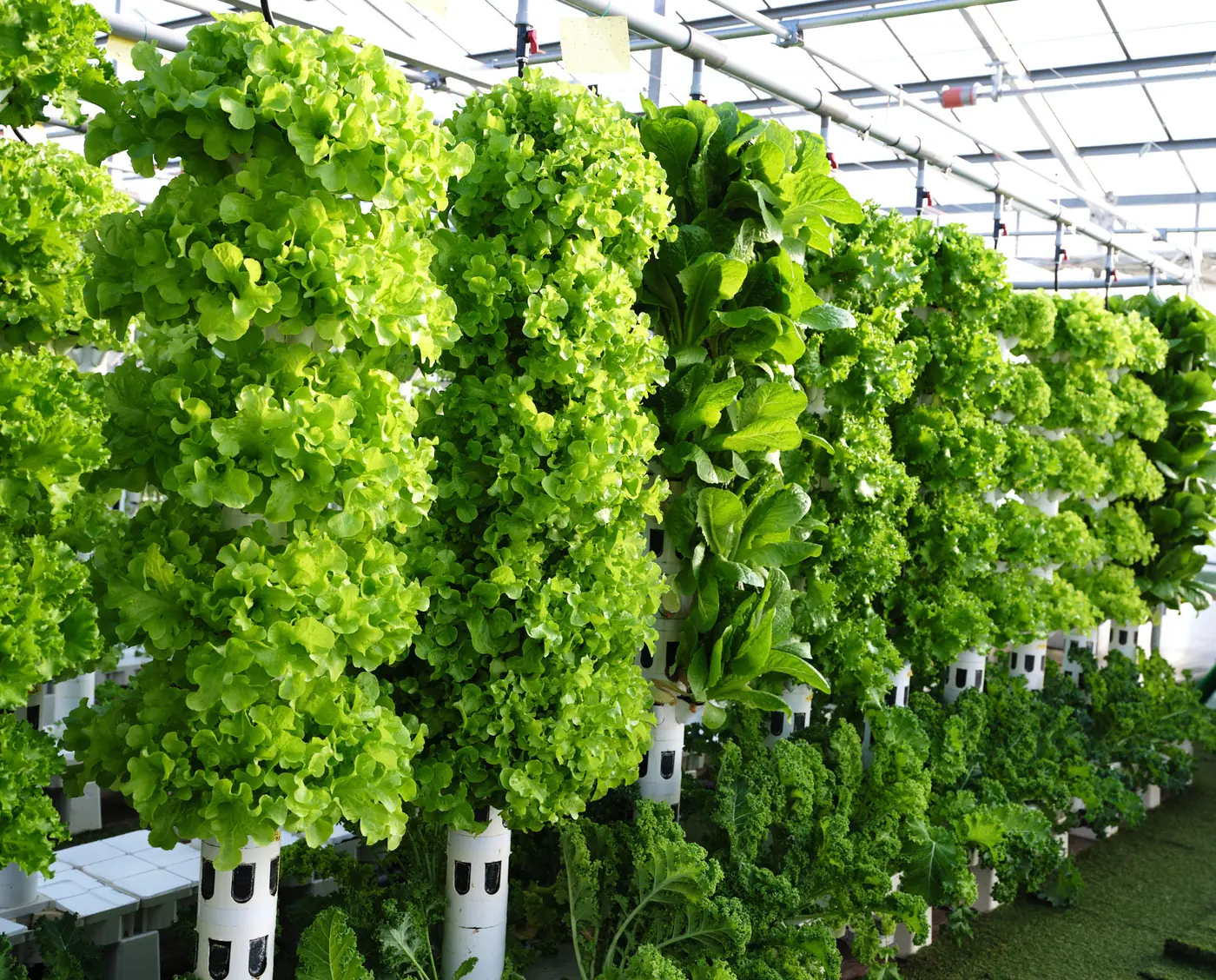
Vertical farming is a way of growing crops indoors in stacked layers, under artificial lighting, with the climate fully controlled. Instead of spreading crops across a field or a single-level greenhouse, plants grow on shelves or towers, often several metres high, inside a building such as a warehouse, shipping container or purpose-built facility.
It’s part of a wider group of methods known as controlled environment agriculture (CEA), which also includes greenhouses and polytunnels.
This guide explains how vertical farming works, which crops suit it, the advantages and challenges, and where the industry is heading.
How does vertical farming work?
Most vertical farms combine four things:
- Stacked growing layers. Crops grow on racks, towers or moving gutters, which makes the most of floor space.
- LED lighting. LEDs replace sunlight. Growers can tune the brightness, colour and hours of light to each crop.
- Soilless growing systems. Plants grow in water or a substrate instead of soil, usually using one of three methods:
- Hydroponics: roots sit in nutrient-rich water
- Aeroponics: roots hang in the air and are misted with nutrients
- Aquaponics: fish waste provides the nutrients for the plants. Read our story on Aquponi, which grows strawberries and trout together.
- Full climate control. Temperature, humidity, CO₂ and airflow are managed precisely, usually by software and sensors.
Because everything is controlled, a vertical farm can produce the same crop to the same standard, all year round, whatever the weather outside.

Which crops grow best in vertical farms?
| Good fit | Possible, but harder | Not currently viable |
|---|---|---|
| Lettuce and leafy greens | Strawberries | Wheat, rice and other cereals |
| Herbs (basil, coriander, mint) | Tomatoes | Potatoes |
| Microgreens | Peppers | Pulses such as beans |
| Young plants and seedlings | Cucumbers | Tree fruit |
Leafy greens and herbs dominate because they grow quickly, stay small and are sold by weight with little waste. Fruiting crops like strawberries and tomatoes need more light and pollination, but they’re attracting more investment and research.
Breeders are now developing varieties specifically for indoor growing. See our story on the University of Georgia’s work breeding crops for CEA

What are the advantages of vertical farming?
- Year-round production: consistent supply regardless of season or weather
- Less land: many layers of crops on one footprint
- Less water: recirculating systems use far less water than field growing
- Little or no pesticide use: a sealed environment keeps most pests and diseases out
- Grown close to customers: farms can be built near cities, cutting transport time and food miles
- Consistent quality: uniform crops with predictable yields, which suits retailers and food service
- Shelter from climate extremes: heatwaves, droughts and floods don’t affect the crop directly
What are the challenges of vertical farming?
- Energy costs: lighting and climate control use a lot of electricity. This is the industry’s biggest challenge, and high energy prices have put pressure on many vertical farms in recent years.
- High start-up costs: buildings, LEDs, automation and software need significant investment.
- A limited range of crops: at the moment the economics mainly work for high-value, fast-growing crops.
- Carbon footprint: the environmental benefit depends heavily on where the electricity comes from.
A 2025 study in Plant Physiology by Lovat, Noor and Milo used simple calculations to test the limits. It estimated that current vertical farms convert only around 1–2% of the electricity they buy into food energy. The authors found vertical farming is “not currently competitive” for staples like wheat, rice and soybeans. Lettuce and tomatoes come closer, with electricity costs of about $0.5/kg, near their producer prices. They concluded that better energy efficiency and low-impact electricity are both needed.
Vertical farm or greenhouse: what’s the difference?
| Vertical farm | Greenhouse | |
|---|---|---|
| Light | 100% artificial (LED) | Mainly sunlight, sometimes with extra lighting |
| Layers | Many | Usually one |
| Energy use | High (lighting) | Lower (sunlight is free), though heating can be significant |
| Land use | Very low per kg | Low to moderate |
| Best crops | Leafy greens, herbs | Tomatoes, cucumbers, peppers, strawberries, flowers |
Many growers now use a hybrid approach, such as greenhouses with extra LED lighting, or semi-closed greenhouses that recirculate air and CO₂. See our story on [Gourma’s new low-carbon herb greenhouses].
Where is vertical farming heading?
After rapid growth and some high-profile setbacks, the industry is becoming more focused. Key trends include:
- Renewable and cheaper energy, including solar power, heat recovery and better LEDs
- Automation and AI to cut labour costs. See our stories on [Elevate Farms] and [hexafarms].
- Crop breeding for indoor conditions, so varieties are designed for LEDs and stacked layers rather than fields
- Smaller, modular systems, such as container farms for schools, communities and research
- Fruiting crops, especially strawberries, as the next big opportunity

Frequently asked questions
Is vertical farming the same as hydroponics?
No. Hydroponics is a way of growing plants in nutrient-rich water without soil. Most vertical farms use hydroponics, but hydroponics is also widely used in single-level greenhouses.
Is vertical farming better for the environment?
It depends. Vertical farms use much less land and water and few pesticides, but they use a lot of electricity. Their overall environmental impact depends largely on whether that electricity comes from renewable sources.
Can vertical farms grow fruit?
Yes, but it’s harder. Strawberries are the most common fruit grown in vertical farms, and tomatoes are also being trialled. Tree fruit such as apples is not practical.
Why have some vertical farms closed?
High energy prices, high start-up costs and difficulty reaching profitability at scale have challenged parts of the industry. Successful farms tend to focus on high-value crops, efficient energy use and strong customer contracts.
Is vertical farming profitable?
It can be, for the right crops and business model. Profitability depends mainly on energy prices, crop choice, automation, and long-term supply agreements with retailers or food service businesses.
Explore more on The Fresh Edit: https://the-fresh-edit.com/vertical-farming-news/


Leave a Reply