
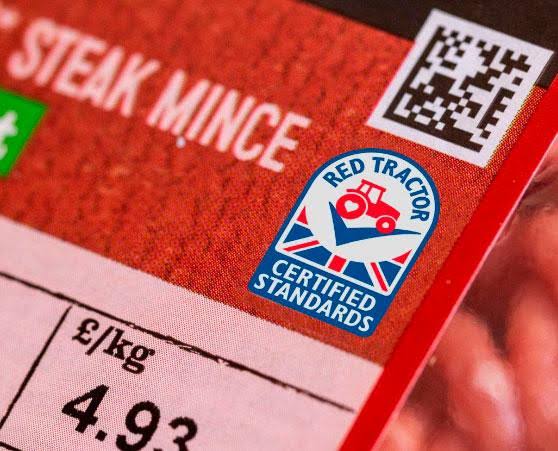
Growers have until 22 December to comment on the biggest overhaul of Red Tractor’s fresh produce standards in years. The proposals bring in tighter food safety controls for higher-risk crops and cut duplication across the scheme. Red Tractor launched the six-week consultation today, 10 November.
“If something won’t work for your crop or business, tell us why,” said Veryan Bliss, chair of Red Tractor’s Fresh Produce Sector Board, in an announcement urging growers to respond.
What’s proposed
1. Leafy salad controls extended to other higher-risk crops
In 2026, Red Tractor introduced a leafy salads add-on, drafted to address industry concerns about STEC contamination. STEC is a dangerous strain of E. coli. Under the proposals, relevant controls from the add-on would become core standards for applicable higher-risk crops. They include:
- risk assessments for field and irrigation water
- manure management
- pre-harvest checks
- product handling
- microbiological swabbing in packhouses
- measures against contamination from condensation in cold stores
2. Less duplication
Repeated requirements, such as food safety policies and staff training, would be consolidated across harvesting, packing and site operations, so a business is assessed on them once rather than at every stage. Growers would still have to meet the requirements; they just wouldn’t be repeated in different sections.
3. Proportionate rules for lower-risk crops
Growers of lower-risk crops, such as potatoes, wouldn’t have to meet every extra control designed for higher-risk produce.
4. Benchmarking kept
Requirements that support benchmarking to GLOBALG.A.P. and the SAI Platform would stay. This matters to growers supplying customers who require those schemes.
Why now?
The consultation is part of a sector-by-sector review of all Red Tractor standards. Red Tractor launched the final four consultations today, covering fresh produce, combinable crops and sugar beet, pigs and poultry.
For fresh produce, the review has gone through the 179 standards and 480 audit points line by line. The aim, according to Red Tractor, is to streamline assessments, reduce the audit burden and keep standards relevant. The proposals were developed by the Fresh Produce Technical Advisory Committee, made up of growers, supply chain representatives and customers, and reviewed by the Fresh Produce Sector Board and Standards Committee.
Bliss stressed that the review isn’t “about reducing standards for the sake of it”. She said: “If a control matters for food safety and gives customers confidence in British produce, it needs to stay.”
When will the changes apply?
Not yet. Red Tractor has said nothing changes for members until 2027. Updated standards will be implemented in 2027 following UKAS approval.
How to respond
- Deadline: 22 December 2026
- Where: the online portal at redtractor.org.uk/fp-consultation
- What to focus on: whether the proposals affecting your crops would be practical and proportionate for your business. Red Tractor says specific, evidence-based feedback is the most useful.
The NFU, whose representatives sit on Red Tractor’s sector boards and technical committees, is also encouraging members to respond.
Our view
For leafy salad growers already working to the add-on, the changes may feel like formalising what they already do. For growers of other crops that could count as “higher risk”, the detail matters: the definition of which crops fall into that category will decide how much extra work this means. Growers should check whether their crops are on the list before the deadline, and say so if they think the classification doesn’t fit.
Source: Red Tractor announcement and NFU, 10 November 2026.
Image Credit: Red Tractor



Leave a Reply